EN
EN  IT
IT  ES
ES  FR
FR Vine fertilisation in autumn: what it is used for
The fertilisation is an agricultural practice that makes it possible to return to the soil the substances removed by cultivation and thus improve its biological, chemical and physical properties. It is therefore an action aimed at rebalancing soil health, which is also fundamental for plant development and growth. Autumn fertilisation, in particular, guarantees the supply of 1/3 of the nitrogen needed in post-harvest, in the period preceding winter dormancy, i.e. 30-40 days before leaf fall. Vine fertilisation in autumn is the ideal time to replenish the plant's reserves, as the temperatures still allow photosynthetic activity, while the leaves and root system are still active. In addition, soil moisture is sufficient to ensure the assimilation of nutrients until leaf fall.
Post-harvest vine foliar fertilisation: all the benefits
Not only that, post-harvest autumn fertilisation allows an increase in reserve substances that will be able to cover the needs of the plants until late flowering. In this way, the vine will be better able to cope with the spring recovery, improving the production result. And it doesn't end there. Another great advantage of post-harvest fertilisation lies in the possibility of offering the plant greater resistance during the winter frost period. All this is possible thanks to an increase in mineral salts in the sap of the plants, which benefit from this nitrogenous fertilisation carried out in a rational manner. In the case of vines, post-harvest fertilisation is even more strategic, especially in the case of early harvests. In fact, this practice allows a better distribution of macro and micro elements, especially phosphorus and potassium. Autumn fertilisation therefore represents a truly valuable solution for the growth and health of the vine. On the contrary, the supply of nitrogen with traditional fertilisers in early spring is not very effective. In this period, in fact, the root activity for absorbing nutrients from the soil is low, and much of the nitrogen supplied is lost through leaching, with the consequent risk of environmental pollution and economic loss for farmers.
The autumn fertilisation technique
Of course, in order for post-harvest fertilisation to bear fruit, it is essential to put appropriate techniques into practice. Specifically, it is necessary to follow the trend of nitrogen removal from the fruit trees and its distribution throughout the year. In this way, it is possible to maintain an adequate level and at the same time avoid excessive nitrogen availability in the spring. In fact, providing the plant with nitrogen that can be immediately assimilated at the end of the winter period risks lengthening the vegetative cycle and inducing an excessive vegetative luxuriance with consequent negative effects on the ripening time and fruit quality. Not only that, effective post-harvest autumn fertilisation must rely on effective and soil-friendly products.
Post-harvest vine fertilisation: the most effective products
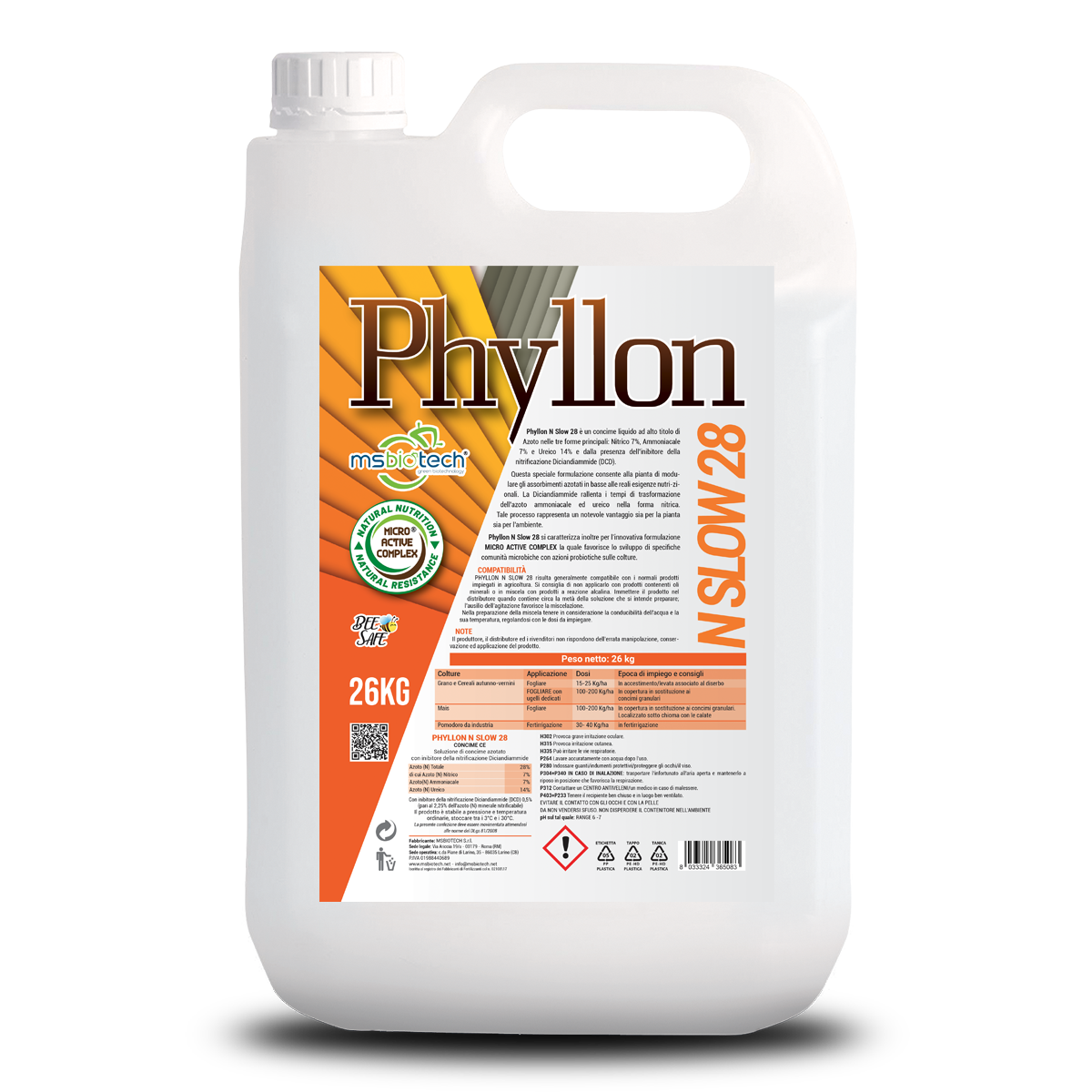
In this respect, we at MS Biotech offer a wide range of biostimulants and fertilisers aimed at rebalancing soil health and promoting plant growth. For a good post-harvest autumn fertilisation, in particular, we suggest using the product PHYLLON N Slow 28. This is a liquid fertiliser with a high nitrogen content in the three main forms together with the nitrification inhibitor Diciandiamide (DCD). This special formulation allows the vine to modulate nitrogen uptake down to actual nutritional needs and ensure that reserve substances can be stored for vegetative recovery. Phyllon N Slow 28 is also characterised by its innovative formulation MICRO ACTIVE COMPLEX which promotes the development of specific microbial communities with probiotic actions on crops. It is therefore the ideal product for all those farmers practising post-harvest vine fertilisation.