EN
EN  IT
IT  ES
ES  FR
FR Powdery mildew and downy mildew are two of the most common and damaging fungal diseases in agriculture. They affect a wide variety of crops - from grapevines to vegetables, tomatoes, lettuce, courgettes and cereals - and can seriously affect crop yields and quality.
Often confused with each other, these two pathologies have different causes, opposing development conditions and require targeted strategies. In this article, we explain how to recognise, prevent and counteract them, also thanks to the microbiological solutions from MS Biotechformulated for modern, sustainable and residue-free agriculture.
Oidium: the 'white disease' that loves heat
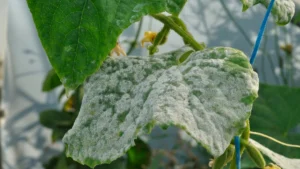
Powdery mildew is caused by fungi of the genus Erysiphe, Podosphaera and the like. It is easily recognisable by the white powdery patina covering leaves, stems and fruits. It develops under conditions of dry heatespecially when the plants are dense and poorly ventilated.
The initial symptoms appear on the upper page of the leaves, then spread to the young shoots and finally to the fruit, causing necrosis, deformation and slowing down of photosynthesis. The most affected crops are vine, tomato, courgette, cucumber, rose and cereals.
Downy mildew: the silent enemy of humidity
Downy mildew is caused by oomycetes such as Plasmopara viticola o Phytophthora infestans. It manifests itself under opposite conditions to powdery mildew: high humidity, frequent rainfall and prolonged leaf wetness.
The first signs are translucent, oily spots on the leaveswhich become necrotic over time. A whitish mould appears on the underside. The crops affected are mainly grapes, tomatoes, potatoes, lettuce and onions. If left unchecked, downy mildew can lead to complete destruction of vegetation in a few days.
Differences to bear in mind
Despite being both fungal diseases, powdery mildew and downy mildew develop under opposite conditions: powdery mildew proliferates in hot, dry environments, downy mildew in cool, moist environments. Also the way in which attacking the plant is different: powdery mildew grows on the surface of the leaves, downy mildew penetrates the tissues, making its action deeper and more systemic.
Recognising the disease early and adopting a preventive approach is essential to limit its impact, avoiding repeated chemical interventions or irreversible damage to the crop.
Defence strategies: acting before it is too late
The fight against powdery mildew and downy mildew is not won with a single product, but with an approach integrated and targeted. This includes:
- Correct irrigation management
- Crop rotations and variety selection
- Pruning and crown aeration
- Constant microclimate monitoring
- Use of natural and microbiological productsenhancing plant resistance
In our microbiology laboratory, MS Biotech researches and develops formulations based on selected microorganismsideal for preventing and combating both diseases without resorting to synthetic chemicals.
How we can help you: our microbiological solutions
NOVIDIUM
The most comprehensive solution against biotic and abiotic stresses. NOVIDIUM contains a combination of useful microorganisms and substances of natural origin that activate the induced systemic resistance (ISR). Used regularly, it also improves the plant's response to downy and powdery mildew, strengthening the leaf structure and supporting physiology even in critical climatic conditions.
TRICOTECH
Based on selected strains of Trichoderma harzianum, colonises the rhizosphere and protects the root system. Although not a direct foliar treatment, it improves the general plant healthmaking it less susceptible to fungal attacks. A well-rooted and balanced plant is the first form of prevention.
RIZOTECH PLUS
Ideal during transplanting or sowingcontains mycorrhizal inocula that improve nutrient uptake and stress tolerance. Better nourished and rooted plants react better to pathogens.
Customised technical programmes
Every farm has different needs, and every crop requires a specific plan. That is why we offer customised agronomic advice, built on:
- climatic trends
- history of diseases
- type of soil
- irrigation techniques
- cultivated varieties
Our technicians will support you in placing our products within a preventive and integrated programmewhich will allow you to minimise the use of conventional pesticides and improve quality and yield.
Why choose the microbiological route
Using solutions based on beneficial microorganisms means:
- Preventing rather than curing
- Respect for the environment and soil health
- Avoiding residues on harvested products
- Reducing dependence on synthetic pesticides
- Ensuring more stable and quality production even under difficult conditions
Conclusion: powdery mildew and downy mildew are fought with innovation and nature
Fungal diseases cannot be eliminated, but they can be intelligent management. With a modern agronomic approach and the use of targeted microbiological solutionsyou can protect your crops effectively, sustainably and in compliance with regulations.
If you want to discover which of our products is best suited to your crop and climate, contact us. We are available to build a customised natural defence plan with you.
Write to us: together we can tackle powdery mildew and downy mildew with smarter, uncompromising agriculture.