EN
EN  IT
IT  ES
ES  FR
FR
What is ferric chlorosis?
The ferric chlorosis is an iron deficiency physiopathy that affects many plants more or less sensitive to the lack of this trace element. The lack of iron, even at minimal levels, leads to a slowdown in the photosynthetic and respiratory process of the plant, with negative consequences on agricultural production, both in terms of quantity and quality.
Biological role: iron is the constituent of the cytochrome protein molecule, intervenes in the biosynthesis of chlorophyll and chloroplasts, regulates vegetative growth mechanisms and participates in many photosynthetic and respiratory oxidation-reduction processes.
Symptoms: Deficiency is manifested by a typical internerval chlorosis (yellowing) starting with the youngest leaves of the plant. If the iron deficiency continues, the younger leaves tend to necrosis, while the older leaves also start to yellow with the following consequences: stunted vegetative growth, leaf fall and often even the death of the plant itself.
Causes: in most cases these are not to be found in the scarce presence of iron in the soil, but are essentially linked to the calcareous nature of the soil: it favours the presence of high concentrations of bicarbonate ions which cause an increase in the pH of the soil, making the iron insoluble and not usable by the plants. But the high pH of the soil is not the only factor responsible for ferric chlorosis: excess nitric fertilisation, soils rich in phosphorous, aluminium and heavy metals, low soil temperature and frequent soil tillage that favour the oxidation of the ferrous ion Fe2+ (plant-absorbable form) into the ferric ion Fe3+ (insoluble) can also aggravate the iron deficiency symptom picture.
Treating ferric chlorosis
Therapy mainly involves the use and administration of iron chelates. Chelates are organo-metallic compounds with a ring molecular structure that are able to capture and incorporate the ferrous ion (Fe2+) within them, making it available to plants, even under alkaline pH conditions. These compounds are water-soluble and directly absorbable by both roots and leaves.
Both synthetic and organic chelates exist, such as lignosulphonates or iron fertilisers chelated with amino acids and peptides.
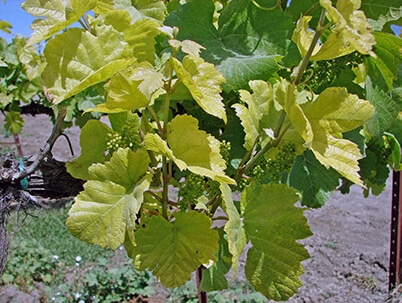
Like plants, certain naturally occurring micro-organisms secrete siderophores (Neilands 1995), water-soluble, low molecular weight pigments that are able to specifically bind trivalent iron (Fe3+) (Faraldo-Gòmez and Sanson, 2003) facilitating intracellular transport and iron assimilation in plants (Weller, 1988; Meldrum, 1999). Experiments with siderophore-producing microorganisms, especially those belonging to the genus Pseudomonas, Bacillus and with mycorrhizae, have shown a reduction in iron chlorosis compared to plants not treated with beneficial microorganisms (Bavaresco et al., 2002).
In conclusion, it can be said that the application of micro-organisms improves iron uptake by the plant: the use of micro-organisms, combined with good organic fertilisation and foliar fertilisers based on chelated iron with peptides and/or amino acids, is a natural remedy for preventing iron chlorosis.
MSBIOTECH solutions
- TWINTECH IRON TWINTECH IRON Line (for soil)
- VERATECH GREENSTAR from the VERATECH Line (foliar)
- BALANCE rich in rhizosphere probiotics from the RIGENERA Line (for soil)