EN
EN  IT
IT  ES
ES  FR
FR Grey mould is one of the most widespread fungal problems in agricultural crops and can affect numerous species, from grapevines to vegetable and fruit crops. High humidity, prolonged wetness of the tissues and poor ventilation can create conditions particularly favourable to its development, especially during the most delicate phases of the production cycle.
When symptoms become clearly visible, the infectious process may already be underway. For this reason, in the management of botrytis, we believe it is essential to work primarily on prevention, reducing predisposed conditions and intervening before the pathogen pressure becomes high.
In this in-depth look, we examine which factors favour botrytis and what agronomical strategies we can adopt to limit the risk.
To learn more in detail about the symptoms and characteristics of the disease, we have already dedicated an in-depth article to “Botrytis in plants: how to recognise and treat it naturally with Botrimax”.
What is botrytis and why is it so widespread?
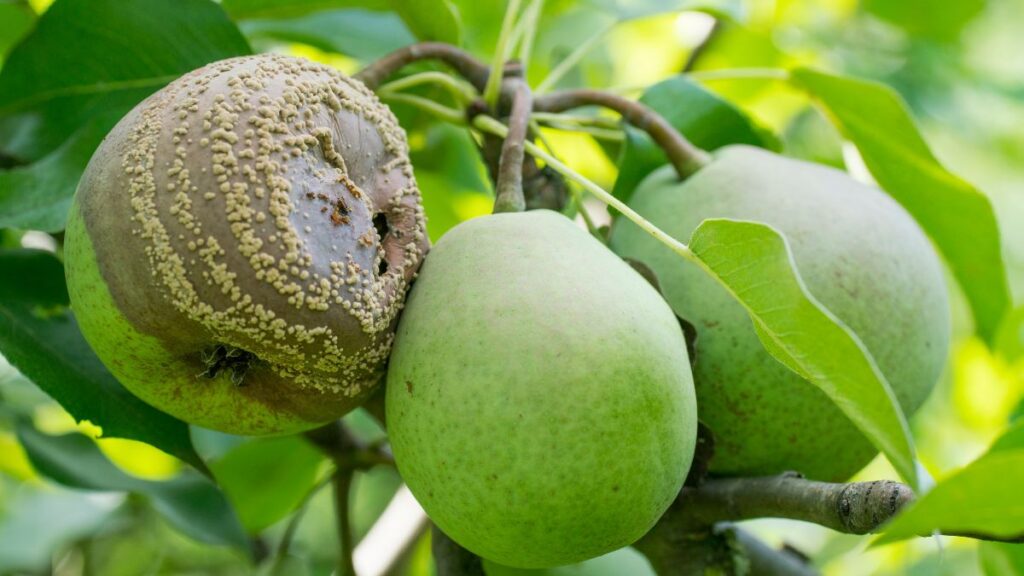
Botrytis, commonly known as grey mould, is primarily associated with the fungus Botrytis cinerea, a pathogen capable of affecting numerous plant species.
It can develop on different organs of the plant, including leaves, flowers, shoots and fruits.
One of the features that makes the management of Botrytis cinerea particularly complex is its ability to take advantage of favourable environmental conditions and vulnerable, damaged or senescent plant tissues.
The characteristic development of greyish mould represents one of the most recognisable symptoms, but waiting for this manifestation often means noticing the problem when the infection is already advanced.
Which conditions favour botrytis?
Understanding the conditions favourable to botrytis is the first step to preventing it.
Humidity represents one of the most important factors. Periods characterised by frequent rainfall, persistent dew, high relative humidity or prolonged wetting of the vegetation can create a microclimate favourable to the development of the pathogen.
Even particularly dense foliage can increase the risk. When air circulates with difficulty between leaves and fruit, moisture tends to linger for longer.
In the greenhouse, the problem can be further accentuated by condensation and insufficient ventilation.
Therefore, we must not only consider what happens at a meteorological level. Agronomic crop management can also significantly alter the microclimate around plant tissues.
Botrytis and humidity: why they are closely linked
The presence of free water on plant surfaces and high relative humidity promote various biological processes involved in the development of fungal infections.
For this reason, prolonged periods of high humidity must be considered times requiring particular attention.
In the open field, frequent rainfall during sensitive stages can increase the risk. In protected crops, on the other hand, we must pay particular attention to ventilation and irrigation management.
The objective is to avoid, as far as possible, leaves, flowers and fruit remaining wet for prolonged periods.
Which crops are most affected by botrytis?
Botrytis cinerea has a very high number of host plants and can represent a problem in numerous agricultural productions.
Among the crops on which it is frequently observed we find:
- faster;
- strawberry;
- pomodoro;
- pepper;
- aubergine;
- lettuce and other leaf vegetables;
- soft fruits;
- diverse floricultural and ornamental crops.
Sensitivity and the period of highest risk naturally vary depending on the species, variety, climatic conditions and cultivation system.
Grey mould of the grapevine: pay attention to the pre-harvest stages
Grey mould in grapevines is a particularly significant issue because it can directly affect the bunch and compromise both the quality and quantity of production.
The compactness of the bunch, the rainfall and the high humidity during the ripening stages can create favourable conditions.
Any damage to the berries can also increase vulnerability. Indeed, damage caused by hail, insects or splitting can represent points through which the pathogen finds more favourable conditions to colonise the tissues.
Proper canopy management, aimed at favouring aeration and light penetration, therefore becomes an integral part of the preventive strategy.
Botrytis on tomatoes and horticultural crops
In horticultural crops, especially in protected environments, microclimate management assumes even greater importance.
High vegetative density, poor ventilation and the persistent presence of condensation can create a particularly favourable environment.
On the tomato plant, for example, the issue can affect leaves, stems, flowers and fruit.
Particular attention must also be paid to crop operations that cause wounds to the tissues. Pruning, de-suckering and other tasks must be managed correctly because damaged tissues can be more vulnerable.
How to prevent botrytis: starting with agronomic practices
Botrytis prevention cannot rely on a single intervention.
The first element is the management of the microclimate.
Promoting good air circulation through correct planting density and balanced vegetation management helps to reduce the persistence of moisture on the tissues.
Irrigation must also be carefully scheduled. When possible, it is preferable to avoid conditions that cause prolonged wetting of the aerial parts of the plant.
It is also important:
- remove plant debris and damaged tissue;
- maintain proper canopy aeration;
- manage ventilation properly in greenhouses;
- avoid excessive vegetative vigour;
- minimise, where possible, wounds and tissue damage;
- monitor the weather conditions closely.
The combination of these interventions makes it possible to reduce the conditions favouring the development of the pathogen.
Why a balanced plant is important
Prevention is not solely about the fungus, but also about the physiological state of the crop.
Overly aggressive nutrition can promote very dense vegetation and particularly tender tissues, indirectly creating more favourable conditions for the development of certain problems.
On the contrary, a balanced management of nutrition, irrigation and vegetation helps to maintain stronger tissues and a better-ventilated canopy.
For this reason we consider the prevention of botrytis as part of an overall agronomic strategy.
Botrimax: our microbiological approach to botrytis
Alongside correct agronomic practices, we can intervene through strategies based on the use of selected microorganisms.
That is why we have developed Botrimax, an MS Biotech solution specifically designed to support crops in managing stress associated with botrytis.
Botrimax fits into a preventative approach, in which the objective is not to wait for the evident appearance of grey mould, but to intervene in the most predisposed phases and conditions.
The product can therefore be integrated into agronomic programmes that combine monitoring, microclimate management, correct nutrition and microbiological strategies.
To find out more about the operation and features of Botrimax in detail, we recommend reading our dedicated article “Botrytis in plants: how to recognise and treat it naturally with Botrimax”.
When does the risk of botrytis increase?
Knowing the times of highest risk allows you to adopt a truly preventative approach.
Particular attention should be paid when forecasts indicate periods characterised by frequent rainfall and high humidity, or when condensation phenomena frequently occur inside the greenhouse.
Even the most sensitive phenological stages must be closely monitored.
Rather than intervening solely according to a predetermined schedule, it is therefore preferable to integrate meteorological information with the observation of the crop and the microclimate.
Botrytis prevention: an integrated approach
An effective strategy comes from the combination of different tools.
At MS Biotech, we consider it particularly important to integrate agronomic management, environmental monitoring, nutritional balance and microbiology.
Reducing persistent humidity, improving aeration, properly managing irrigation and vegetation, and intervening preventatively makes it possible to reduce the conditions favorable to the spread of the problem.
This approach becomes even more important in high-value commercial crops, where an infection in the stages close to harvest can quickly compromise a significant portion of the yield.
Conclusions
Botrytis in crops is closely linked to environmental conditions and the state of the vegetation. High humidity, prolonged leaf wetness, poor ventilation and the presence of damaged tissues can significantly increase the risk.
For this reason, the most effective strategy starts with prevention.
Through correct canopy, irrigation and microclimate management, we can reduce the predisposing conditions. These practices can be supplemented with specific microbiological solutions such as Botrimax, by integrating them into an integrated agronomic programme.
For us at MS Biotech, protecting production primarily means anticipating the problem: observing the crop conditions, identifying the periods of highest risk and intervening before the symptoms become evident.
Botrytis prevention FAQ
What conditions most favour botrytis?
High relative humidity, prolonged wetness of the tissues, frequent rain, poor aeration of the vegetation and the presence of damaged or senescent tissues can create conditions favourable to the development of botrytis.
How to prevent botrytis naturally?
Prevention starts with agronomic management: improving canopy aeration, controlling humidity, properly managing irrigation, removing compromised tissues and using microbiological strategies can help reduce the risk.
What is the difference between botrytis and grey mould?
In agronomic terminology, grey mould is the name commonly used to indicate the disease associated primarily with Botrytis cinerea. The name derives from the characteristic greyish mould that can develop on the affected tissues.
How to prevent grey mould on grapevines?
It is important to promote the aeration of the bunch and canopy, monitor humidity and rainfall, limit conditions of persistent wetness, and pay attention to berry lesions. A preventive strategy can also incorporate specific microbiological solutions.
When to use Botrimax?
Botrimax it finds its place primarily within a preventive and integrated strategy against stresses associated with botrytis. Timing, dosages and methods of application must be adapted to the crop and risk conditions following the technical instructions of the product.