EN
EN  IT
IT  ES
ES  FR
FR What is Trichoderma?
In the vast world of agriculture and plant care, the importance of maintaining a healthy, pathogen-free environment is crucial to ensure the health and productivity of crops. In this context, the Trichoderma emerges as a key ally, offering a natural and effective solution to protect plants from a wide range of fungal diseases.
The Trichoderma is a genus of filamentous fungi commonly found in soil, organic substrates and plant roots. These beneficial microorganisms play a crucial role in the soil ecosystem, contributing to nutrient cycling and the decomposition of organic matter. However, what makes Trichoderma particularly interesting for farmers is its ability to act as an effective biological control agent against plant pathogens.
How does this fungus work?
The Trichoderma fights plant pathogens in different ways. One of the main mechanisms is competition for resources. Once introduced into the soil or growing medium, rapidly colonises space and utilises available resources, preventing pathogens from establishing and proliferating. In addition, produces a wide range of secondary metabolitessome of which have direct antifungal activityby inhibiting the growth and development of plant pathogens. In addition to its role in controlling pathogens, Trichoderma establishes beneficial interactions with host plants. These microorganisms can stimulate root growth, improve nutrient uptake and increase plant resistance to biotic and abiotic stress. Some studies suggest that Trichoderma may also influence gene expression in plants by activating metabolic pathways involved in defence and growth.
Advantages of Using Trichoderma
- Sustainability: As a biological control agent, its use reduces dependence on synthetic chemicals, promoting sustainable and environmentally friendly agricultural practices.
- Wide Range of Action: is effective against a wide range of fungal pathogens, including Fusarium, Pythium, Rhizoctonia and many others, making it a versatile option for plant protection.
- Improved Plant Resistance: Studies have shown that the application of Trichoderma can stimulate the defence system of plants, increasing their resistance to fungal diseases and improving crop quality.
- Ease of Application: can be used in different forms, including powders, granules, liquids and suspension formulations, offering flexibility to farmers in their management practices.
Practical Applications of Trichoderma
The use of the Trichoderma is widely used in a variety of agricultural sectors, including horticulture, fruit growing, viticulture and cereal cultivation. It is applied both in the soil and on plants, through irrigation, foliar treatments or by direct root inoculation.
Our innovative solution based on mycorrhizal mushroom inoculum is contained in the product TRICOTECH. Tricotech is particularly suitable in the early stages of crop development such as post-transplantation, post-implantation or at vegetative restart.
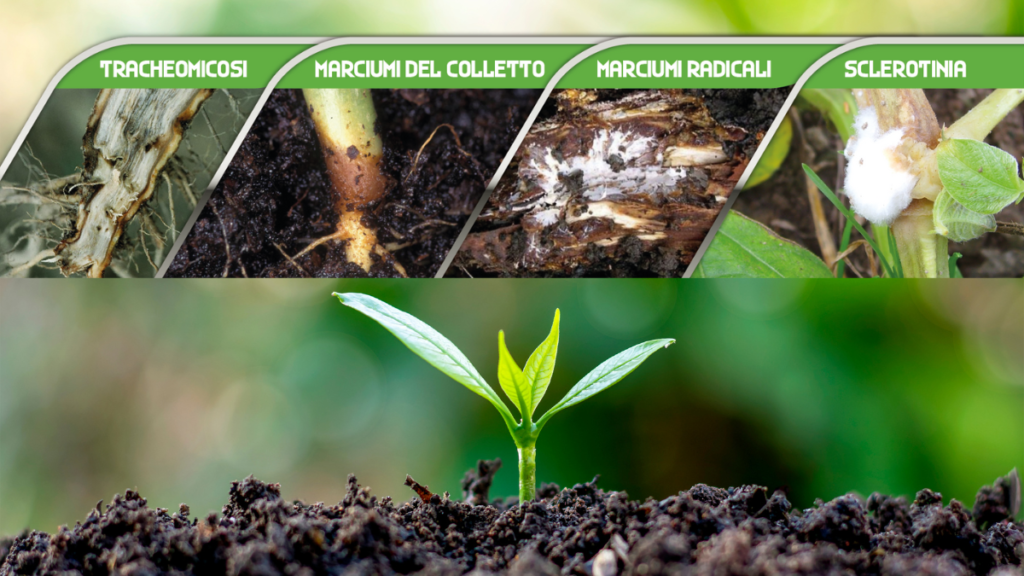
Due to the fungus' ability to colonise the growing medium very early and produce biologically active substances, Tricotech it hinders the development of potential harmful microorganisms such as: (Armillarea, Pythium, Sclerotinia, Rhizoctonia, Fusarium and Verticillium), while stimulating the plants' natural defences.
READ ALSO: