EN
EN  IT
IT  ES
ES  FR
FR Abiotic stressors such as: drought, salinity, frost and excessive heat inevitably lead to damage to agricultural crops, with repercussions on the quantity and quality of production.
These losses are basically attributable to:
- Reduction of the photosynthetic process
- Denaturation of proteins and fatty acids
- Early leaf senescence
- Occurrence of physiopathologies (chlorosis, necrosis, rot)
- Predisposition to pest attacks
Stress factors lead to more or less severe physiological changes depending on the intensity of the stress suffered and the tolerance mechanisms that the plant possesses, and can all be traced back to a common effect, namely the dehydration of plant cells..
Among the various defence mechanisms that the plant possesses, there is the endogenous production of osmotically active metabolites (GlycinBetaine, Proline, ) to counteract the loss of water from the cell. This production, however, is not at zero cost to the plant, which will have to use energy reserves at the expense of flowers and fruit.
GLYCINBETAINE
One of the most researched substances involved in the process of stress reduction in the plant is Glycinbetaine.
The Glycinbetaine is composed of an amino acid (glycine) and a nitrogenous base (betaine).

The Glycinbetaine is a substance that acts within the plant as a natural osmotic regulator,thereby optimising its metabolism or reactivating it following stress conditions. Glycinbetaine keeps cell functions intact as it binds to cell membranes and enzymes, preserving their ability to perform metabolic functions.


BETA is a fast-acting, intensive nitrogen fertiliser of exclusively plant origin, suitable for foliar fertilisation on any crop.
It provides high quantities of plant amino acids, in particular glycinbetaine,a molecule with osmoprotective action that the plant naturally accumulates in response to environmental stress conditions such as high and low temperatures, drought and high salinity.
It also maintains cell turgor by preventing excessive water loss and cell collapse.
In addition to providing readily assimilable organic nitrogen, it increases resistance to environmental stresses and enhances photosynthetic activity of the plant.

APPLICATION ON WHEAT
On wheat crops, weed stress resulting from the use of particularly complex mixtures can create unwanted phytotoxicity problems. BETA can be the ideal tool in this extremely delicate phase.
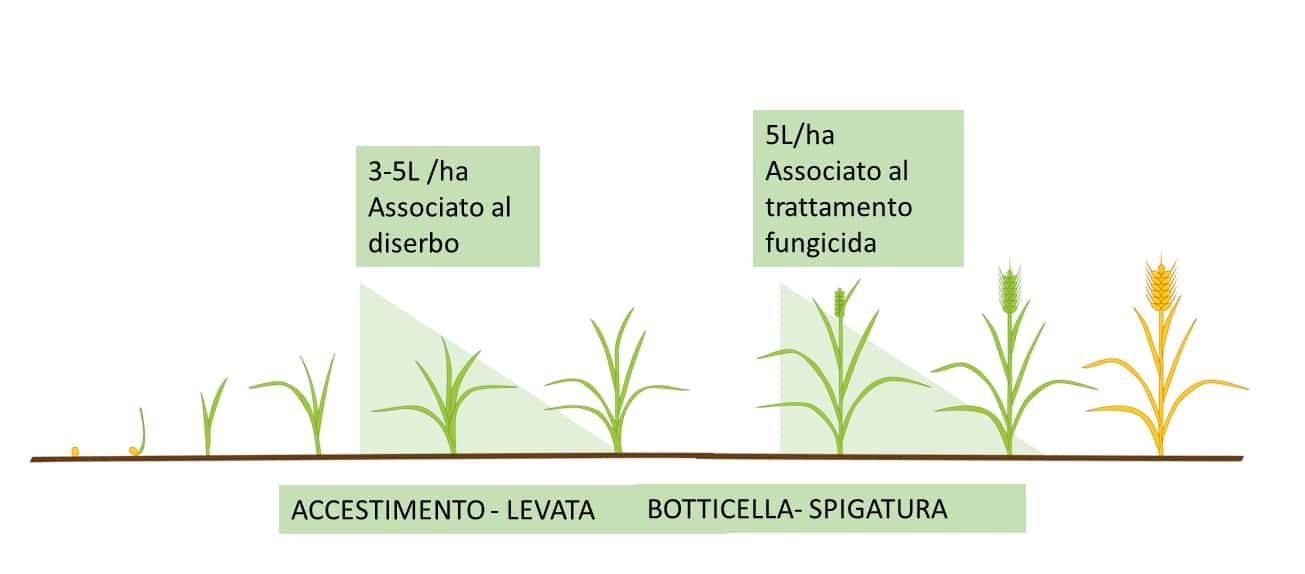
Msbiotech recommends an application of BETA at a dose of 3-5 l/ha associated with weedkilling in the tillering - beginning of lifting phase and a second application at a dose of 5l/ha in the stalk phase, earing, associated with any fungicide treatment,as nutritional support in filling the caryopses.
Read also:
BETA improves plant response to water stress and extreme temperatures.