EN
EN  IT
IT  ES
ES  FR
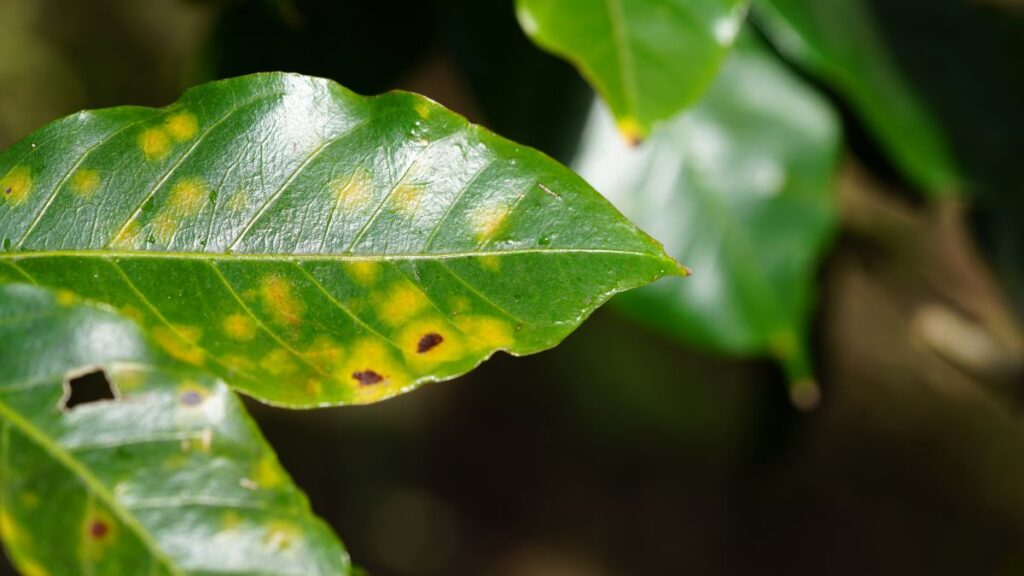
FR Plant rust is one of the most easily recognisable fungal diseases due to the appearance of characteristic yellow, orange, reddish or brown pustules on the leaves and, in some cases, on other plant organs.
The term “rust” does not identify a single pathogen, but a group of diseases caused by fungi belonging mainly to the order Pucciniales. They can affect numerous agricultural crops and, when disease pressure is high, compromise the photosynthesising surface area and reduce yield potential.
For us at MS Biotech, management must first and foremost start with monitoring and prevention, integrating correct agronomic practices with balanced nutrition. In this context, copper-containing products such as Veratech Cu and Gluco Cu they can be included in the crop's nutritional programmes, in accordance with their respective instructions for use.
What is plant rust?
Rusts are diseases caused by biotrophic fungi, that is organisms that develop by using living plant tissues.
There are numerous species responsible for rusts and the life cycle can also be very complex. Some fungi complete their cycle on a single plant species, while others require different hosts.
Among the best-known genera we find Puccinia, Uromyces, Phakopsora and Phragmidium.
The issue can affect cereals, legumes, horticultural crops, fruit crops and numerous ornamental species.
How to recognise rust on leaves
The most characteristic symptom is the formation of pustules, often located on the underside of the leaves.
Their colouration can vary from yellow-orange to red-brown and even darker shades, depending on the pathogen and the stage of its life cycle.
As the disease progresses, we can also observe:
- yellowing of the leaf surface;
- necrosis;
- leaf desiccation;
- early leaf fall;
- reduction of plant development.
In major infections, the loss of efficient leaf area can lead to a reduction in photosynthesis and therefore in the crop's ability to produce and transfer energy to the yield-forming organs.
Which conditions favour rust?
Rust development is heavily influenced by environmental conditions, although optimal temperature and humidity vary depending on the specific fungal species.
In general, high humidity and prolonged leaf wetness can favour spore germination and the development of various rusts.
Excessively dense vegetation can also create a humid microclimate within the canopy and slow down leaf drying.
For this reason it is important to monitor crops with particular care during periods characterised by frequent rainfall, persistent dew and environmental conditions favourable to the disease.
How to prevent plant rust
Effective management must combine multiple tools.
The first is regular crop monitoring. Identifying the initial pustules allows for prompt recognition of the issue and the evaluation of appropriate interventions.
Where applicable, proper vegetation management can promote air circulation and reduce leaf wetness periods. It is also important to avoid nutritional imbalances and excessive vigour, manage irrigation correctly and remove severely compromised plant material when this practice is agronomically appropriate.
In crops and areas historically prone to the issue, prevention must begin before the disease pressure becomes high.
The role of copper in plant nutrition
Copper (Cu) is an essential micronutrient for plants. Although required in limited quantities, it takes part in numerous physiological and enzymatic processes.
It is involved in plant metabolism and redox processes, and contributes to the normal functioning of photosynthesis. It also participates in processes linked to the formation and stability of certain structural components of tissues.
However, it is important to distinguish between two concepts: supplying copper via a fertiliser is not automatically equivalent to carrying out a fungicide treatment.
Nutritional products must be used according to their intended use and the instructions on the label. In the presence of diagnosed rust, however, any phytosanitary interventions must be carried out using products authorised for the specific crop and pest.
Veratech Cu: foliar copper application
Within our range we offer Veratech Cu, Veratech line solution designed to supply copper through foliar application.
The product can be included in nutritional programmes when we want to ensure the crop has an adequate availability of this micronutrient, which is particularly important for numerous metabolic and enzymatic activities.
In an agronomic strategy dedicated to crops prone to foliage issues, Veratech Cu can therefore represent complementary nutritional support to preventive practices and any planned phytosanitary treatments.
Gluco Cu: chelated copper for crop nutrition
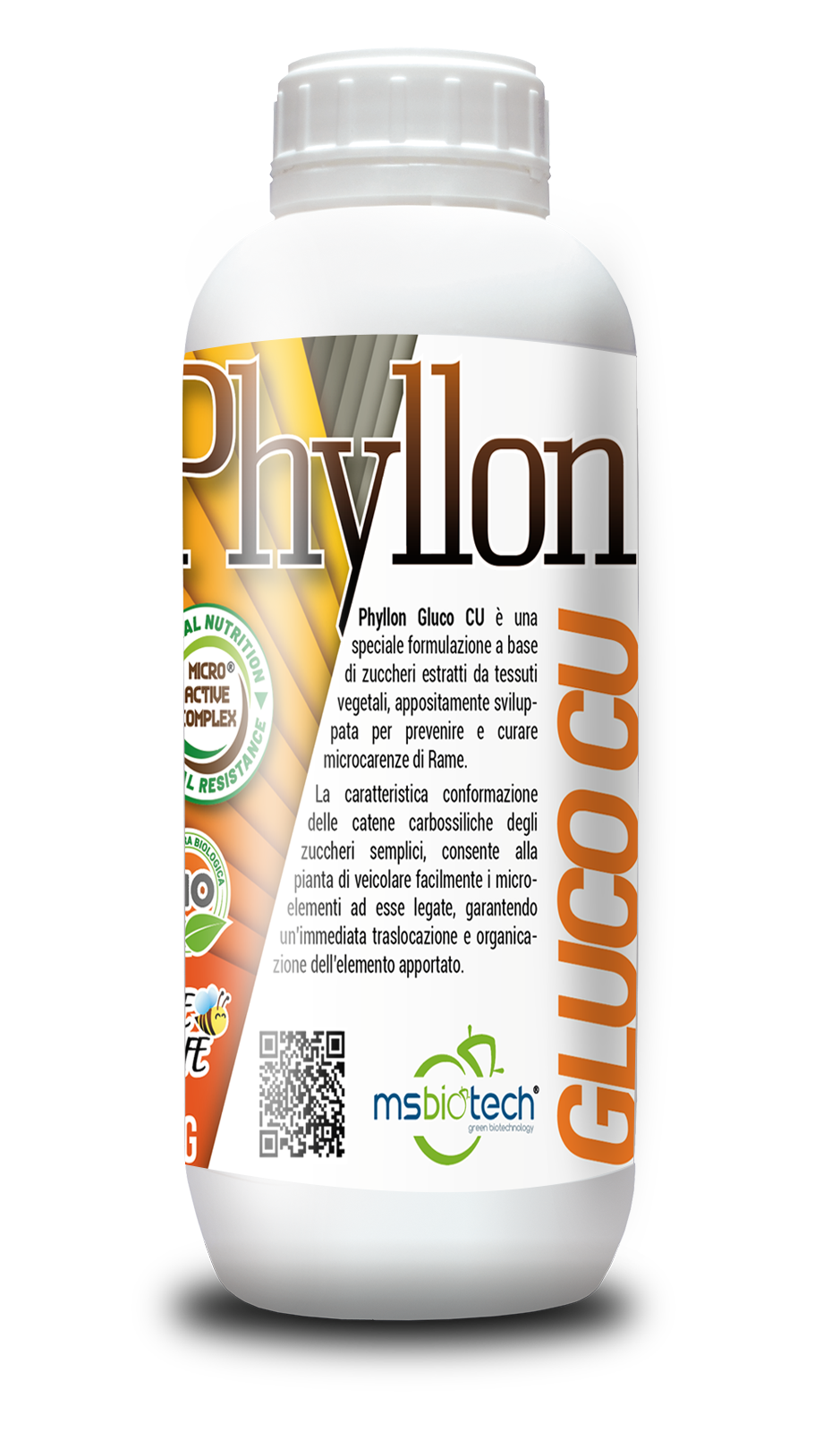
Another solution available in the MS Biotech range is Gluco Cu, belonging to the Phyllon range.
The distinguishing feature of the product is the chelated copper concept, developed to promote efficient use of the element by the plant. The organic molecule rapidly penetrates inside the leaf tissues and moves within the plant, unlike traditional coppers which act only by contact on the surface.
Gluco Cu can be integrated into nutritional programmes dedicated to maintaining the physiological efficiency of the crop and therefore represents an additional solution when it is necessary to work on copper availability.
Veratech Cu and Gluco Cu should not simply be considered as two identical products: the different formulations allow the technician to choose the most suitable solution depending on the crop, the phenological stage and the nutritional programme adopted.
Prevention, nutrition and defence must work together
When tackling issues such as rust, it is important to avoid overly simplistic solutions.
The strategy should start with the correct identification of the pathogen and the assessment of predisposing conditions. Monitoring, crop canopy aeration, irrigation management, and balanced nutrition help to create more favourable agronomic conditions for the crop.
These practices can be supplemented with specific nutritional products, such as Veratech Cu and Gluco Cu, to ensure an adequate supply of copper.
When necessary, the strategy must be supplemented with the means of defence authorised by the regulations for that specific crop and pest.
Conclusions
Plant rust can affect numerous crops and, when not properly managed, reduce the photosynthetically active surface area and compromise production development.
Quickly identifying the characteristic pustules on the leaves and monitoring temperature, humidity and leaf wetness makes it possible to detect risk situations at an early stage.
We at MS Biotech propose an integrated approach based on correct agronomic management, monitoring and balanced nutrition. In this context, Veratech Cu and Gluco Cu they represent two dedicated copper supply solutions that can be included in crop nutritional programmes.
Plant rust FAQ
How to recognise plant rust?
The most characteristic symptom is the presence of yellow, orange, reddish or brown pustules on the leaves. Yellowing, necrosis and withering may also appear.
What causes rust on leaves?
Rusts are caused by various species of fungi belonging mainly to the order Pucciniales. There is therefore no single fungus responsible for all rusts.
Do humidity and rain promote rust?
For many rusts, high humidity and periods of leaf wetness favour infections. However, the optimal conditions depend on the specific combination of pathogen and crop.
What is copper used for in plants?
Copper is an essential micronutrient involved in numerous enzymatic, metabolic and photosynthetic processes. It must be supplied in a balanced way, avoiding both deficiencies and excesses.
Do Veratech Cu and Gluco Cu remove rust?
Veratech Cu and Gluco Cu they are products intended for plant nutrition and the supply of copper and must not be presented as fungicides unless authorised as such. In the presence of rust, the strategy must integrate agronomic practices and, when necessary, plant protection products specifically authorised for the crop and pest.