EN
EN  IT
IT  ES
ES  FR
FR The ripening phase represents one of the most important moments of the entire cultivation cycle. It is precisely in the weeks leading up to harvest that the fruit develops its color, texture, sugar content, aroma, and all those characteristics that determine its commercial value.
However, adverse weather conditions, nutritional imbalances or environmental stresses can slow down or make this process irregular, with direct consequences on production quality. Fruits that ripen unevenly, inconsistent sizes or incomplete colouring can reduce the farm's profitability and increase waste.
For this reason, it is essential to support the plant during this delicate phase with balanced and targeted nutritional management. In this article, we look at which factors influence fruit ripening and how to promote more uniform, high-quality production.
Why is the maturation phase so important
Ripening does not simply coincide with the fruit changing colour.
It is a complex set of physiological processes during which major biochemical transformations take place. Starches are converted into sugars, acidity decreases, aromas increase, natural pigments develop, and the pulp acquires the texture typical of the variety.
Regular ripening allows you to obtain:
- greater production uniformity;
- better fruit colouration;
- improvement in organoleptic quality;
- increased post-harvest shelf life;
- best commercial value.
Every crop has its own specific requirements, but they all benefit from the right nutritional balance during this stage. For an overview of the previous stage of the cycle, see also flower setting and fruit growth: how to naturally increase size and dry matter.
What factors influence ripening?
The ripening process depends on the interaction of numerous factors.
Weather conditions
Temperature, solar radiation and daily temperature range directly influence the synthesis of sugars and natural pigments.
Particularly hot summers or those characterised by severe water stress can slow down the process or result in uneven ripening.
Nutritional availability
Balanced nutrition enables the plant to support the energy requirements needed to complete ripening.
Deficiencies or imbalances of certain elements can compromise colour, texture and final quality.
Plant physiological status
A plant that has suffered stress during its vegetative cycle tends to have a lower capacity to achieve uniform ripening.
For this reason, it is important to maintain high photosynthetic efficiency right up until harvest.
The consequences of uneven ripening
When ripening proceeds unevenly, various production problems may arise.
Among the most frequent we find:
- colour differences between the fruits;
- inconsistent sugar content;
- longer and more expensive collections;
- lower commercial quality;
- reduction in shelf life;
- higher percentage of unmarketable product.
For many farms, this means increasing the number of harvesting passes or accepting a lower average quality.
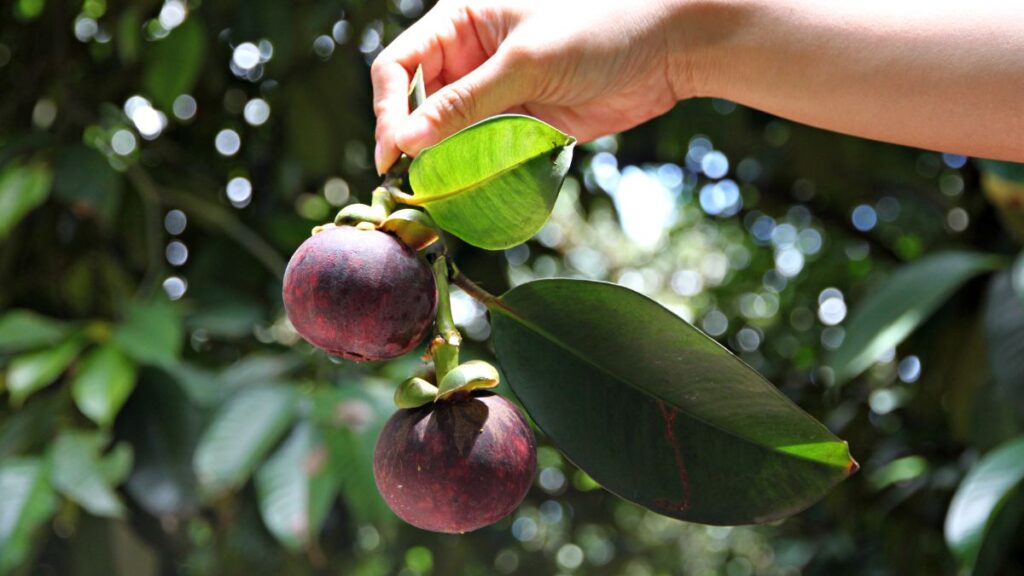
The role of nutrition in fruit quality
Nutrition in the final stages of the crop cycle must not be neglected.
During ripening, the plant continues to require nutrients to support its metabolism, the translocation of sugars and the formation of the substances responsible for the fruit’s quality characteristics.
Proper nutritional management allows for:
- promote sugar synthesis;
- support the development of the typical coloration;
- improve flesh consistency and firmness;
- to help ensure more uniform ripening.
Naturally, every intervention must be adapted to the cultivated species, the variety, and the pedoclimatic conditions of the farm.
The importance of biostimulants in the final stages of the cycle
In addition to traditional fertilisation, biostimulants have played an increasingly important role in managing crop quality in recent years.
These formulations do not replace the plant’s nutrition, but help to improve the efficiency of the physiological processes involved in growth and ripening.
When integrated into a correct agronomic strategy, they can promote a better crop response during the stages of highest metabolic demand, helping to achieve more uniform and high-quality yields.
Veratech Quality: supporting fruit ripening and quality
To support crops in the final stages of the production cycle, we have developed Veratech Quality, a solution designed to ensure the final quality of the produce and promote more consistent and uniform ripening.
When included in a balanced nutritional programme, Veratech Quality can help to:
- encourage a more even colouring;
- support sugar formation;
- improve ripening homogeneity;
- enhance the qualitative characteristics of the production;
- support the plant in the phases leading up to harvest.
The product finds application on numerous tree and vegetable crops, adapting to technical programmes dedicated to improving crop quality. In the earlier phases, dedicated primarily to vegetative development and stress resistance, it may also be useful to evaluate Veratech Power, designed to support photosynthesis and fruit development.
As with any agronomic intervention, the best results are achieved when the product is used in conjunction with correct irrigation, fertilisation and crop management practices.
Planning the interventions makes all the difference
One of the most common mistakes is intervening too late, when the maturation process is already well advanced.
Planning the necessary interventions in the weeks leading up to harvest, on the other hand, allows the plant to be gradually guided through this phase, supporting the physiological processes responsible for the final quality.
Constant monitoring of nutritional status and climatic conditions also makes it possible to schedule inputs at the most appropriate time.
Conclusions
Uniform ripening represents one of the main objectives for those who produce fruit and vegetables destined for the market. Colour, flavour, texture and shelf life depend in fact on the physiological balance of the plant during the final weeks of the production cycle.
At MS Biotech, we believe that quality is achieved through a comprehensive agronomic management approach that integrates nutrition, monitoring and biostimulation. Solutions such as Veratech Quality they are specifically designed to support the crop towards a more even ripening, helping to enhance the productive and commercial potential of the fruit.