EN
EN  IT
IT  ES
ES  FR
FR Mites and thrips they represent some of the main phytophagous pests that can compromise the productivity and quality of numerous agricultural crops. Vegetables, vines, fruit trees, and ornamental crops can suffer significant damage when infestations are not identified and managed promptly.
In recent years, rising temperatures and favourable climatic conditions have contributed to a greater spread of these organisms, making it essential to adopt preventive and sustainable management strategies.
Understanding the behaviour of mites and thrips allows for more effective intervention, reducing the risk of economic damage and preserving the productive potential of crops.
What are mites
The mites they are extremely small organisms, often difficult to observe with the naked eye. Among the most widespread species in agriculture are Red spider mite (Tetranychus urticae), responsible for significant damage to numerous crops.
The mites are mainly located on the underside of the leaves, where they feed by piercing plant cells and extracting nutrients.
Infestations tend to develop rapidly during periods characterised by high temperatures and low relative humidity.
The symptoms caused by mites
Affected plants may show various symptoms, including:
- chlorotic spots on leaves;
- diffuse discolourations;
- loss of vegetative vigour;
- reduction in photosynthetic activity;
- leaf dissections;
- Premature leaf fall.
In more severe infestations, the typical fine webbing that envelopes leaves and shoots may appear.
What are thrips
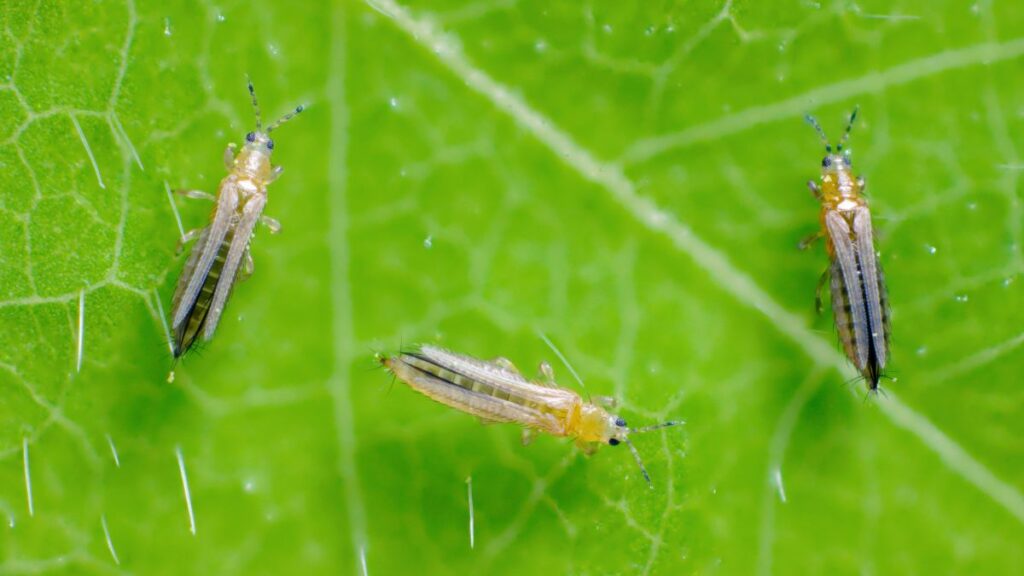
The Cottage They are small phytophagous insects that feed on plant tissues by piercing leaves, flowers, and fruits.
Among the most problematic species in agriculture are *Frankliniella occidentalis*, widely found in horticultural and floral crops.
In addition to the direct damage caused by feeding, thrips can promote the transmission of some important viruses, further increasing the risk to the crop.
Damage caused by thrips
The presence of thrips can cause:
- foliar silvering;
- tissue deformities;
- colour alterations;
- damage to the flowers;
- Superficial damage to fruit;
- reduction in the commercial value of the crop.
For high-value crops, even small infestations can significantly impact the final quality of the produce.
Why monitoring is fundamental
One of the most important aspects in mite and thrips management it's early monitoring.
These organisms have very rapid life cycles and can multiply quickly when environmental conditions are favourable.
Intervening in the early stages makes it easier to contain the population and limit damage to the crop.
For this reason, it is advisable to carry out regular checks throughout the cultivation cycle, paying particular attention to periods characterised by high temperatures.
Sustainable management strategies
The modern agriculture requires increasingly sustainability-oriented approaches and a reduction in environmental impact.
A correct management strategy should include:
- constant crop monitoring;
- Prevention of conditions conducive to infestations;
- enhancement of biological balances;
- use of solutions compatible with sustainable agriculture;
- integration of different defence techniques.
The aim is not only to tackle the problem in the short term, but to build a more resilient production system in the long term.
Protendo: support in crop defence strategies
To support farmers in managing stress caused by mites and thrips, we have developed Protendo.
The product is integrated into integrated defence programmes aimed at preventing and maintaining crop balance.
Integrated into a correct agronomic strategy, Protendo represents valuable support for farms wishing to adopt sustainable and environmentally friendly solutions.
Mites and thrips I am among the herbivores more widespread and problematic for many agricultural crops. Their ability to multiply rapidly makes a preventive approach based on monitoring and integrated management essential.
Regularly observing crops, recognising early symptoms, and intervening promptly helps to reduce damage and preserve quality and productivity.
A sustainable strategy today represents the best solution for tackling the challenges of modern agriculture.